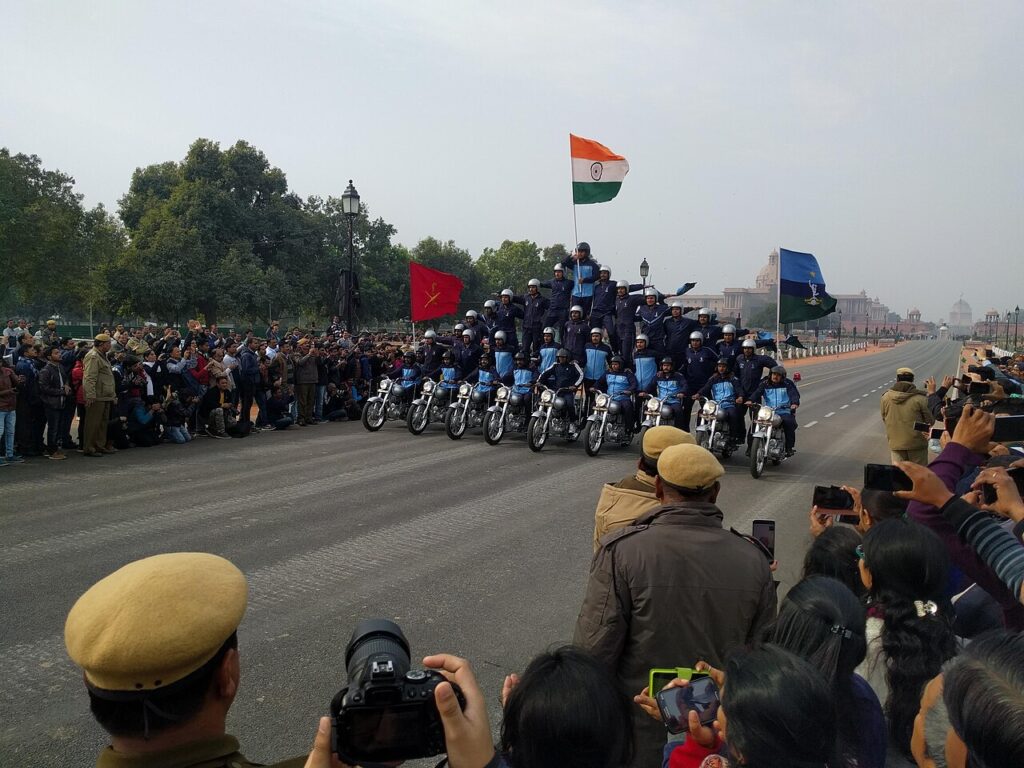
Republic Day of India, celebrated every January 26, marks the day India’s Constitution came into effect, making the country a sovereign republic. In 2026, January 26 falls on a Monday, and it is one of India’s three national holidays, observed across every state with full closures of government offices, banks, and schools. The centerpiece is the grand parade in New Delhi, one of the world’s most spectacular national day celebrations. Understanding what the day commemorates explains why it matters even more than Independence Day to India’s constitutional identity.
Why January 26: The Constitution Takes Effect
India became independent on August 15, 1947, but it remained a dominion with the British monarch as head of state for its first years. Meanwhile, a Constituent Assembly led by Dr. B.R. Ambedkar drafted a new constitution. After nearly three years of work, the Constitution of India was adopted on November 26, 1949, and came into force on January 26, 1950. The date was chosen deliberately: January 26, 1930 had been observed as Purna Swaraj Day, the day the independence movement first demanded complete self-rule. By linking the republic’s birth to that earlier pledge, India’s founders connected the new constitution to the freedom struggle itself. Dr. Rajendra Prasad became the first President of India on that day.
The Republic Day Parade
The main celebration unfolds at Kartavya Path in New Delhi, in a parade that is part military spectacle, part cultural festival. Marching contingents from the army, navy, and air force are followed by tableaux from every state, each a moving display of regional art, history, and achievement. Schoolchildren perform dances, daredevil motorcyclists form human pyramids, and the Indian Air Force closes the show with a flypast, painting the sky in the saffron, white, and green of the flag. The President of India takes the salute, and a foreign head of state is traditionally invited as chief guest. In 2026, with the holiday on a Monday, the parade will follow this grand established format, broadcast live to hundreds of millions of viewers.
How the Rest of India Celebrates
Beyond Delhi, every state capital holds its own parade and flag-hoisting ceremony, with governors taking the salute. Schools organize cultural programs, and the President’s annual Republic Day awards honor bravery, including gallantry awards for children. The evening before, the President addresses the nation on television. A distinctive tradition is the Beating Retreat ceremony on January 29, when military bands perform at Vijay Chowk as the sun sets behind Raisina Hill, formally closing the celebrations. For ordinary Indians, it is a day of patriotic pride expressed through flag-hoisting in housing societies, special television programming, and sweets distributed in schools the next working day.
Holiday Status and Practical Notes
Republic Day is a gazetted national holiday, confirmed for Monday, January 26, 2026. All central and state government offices close, banks shut, and schools and colleges suspend classes. It is also a dry day in many states, meaning alcohol sales are restricted. In Delhi, expect extensive road closures and security checks around Kartavya Path and central Delhi for several days around the parade; the metro runs but with station closures near the venue. Visitors should book parade viewing well in advance or watch from the many public screenings. For anyone doing business in India, treat January 26 as a complete shutdown and plan accordingly.