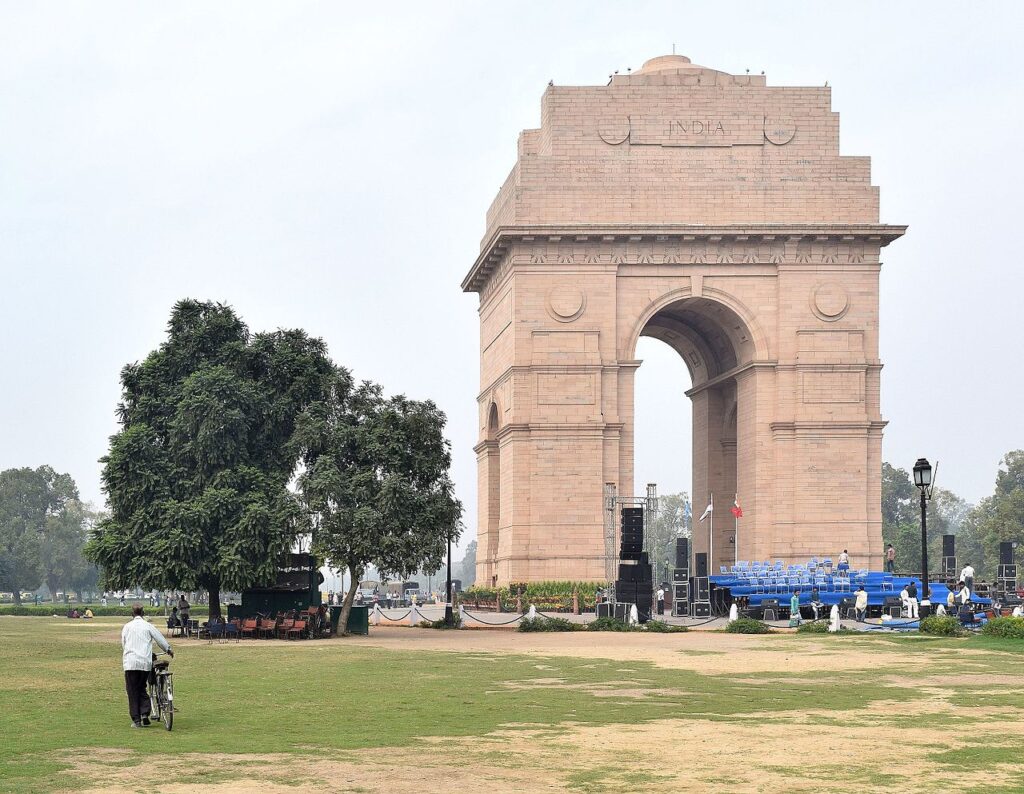
Independence Day of India, celebrated every August 15, marks the end of British colonial rule in 1947 and the birth of independent India. In 2026, August 15 falls on a Saturday, and it remains one of India’s three national holidays, with government offices, banks, and schools closed nationwide. The day’s emotional center is the Red Fort in Delhi, where the Prime Minister hoists the national flag and addresses the nation each year. Few national days are observed with such scale and such personal feeling.
Midnight, August 15, 1947
India’s independence came at the stroke of midnight, in a moment Jawaharlal Nehru captured in his famous Tryst with Destiny speech to the Constituent Assembly. The British had ruled parts of India for nearly two centuries, and the transfer of power followed decades of mass movements led by Mahatma Gandhi, from the Salt March to Quit India. Independence came at a terrible price: the partition of British India into India and Pakistan triggered one of history’s largest mass migrations, with an estimated 10 to 20 million people displaced and hundreds of thousands killed in communal violence. That trauma is inseparable from the celebration, which is why Independence Day speeches always balance pride with remembrance of the sacrifices involved.
The Red Fort Tradition
Every August 15, the Prime Minister of India hoists the tricolor at the ramparts of the Red Fort in Old Delhi and delivers an address to the nation, reviewing the year’s achievements and outlining the government’s vision. The ceremony includes a 21-gun salute, a guard of honor, and a shower of flower petals by air force helicopters. Schoolchildren, NCC cadets, and cultural troupes perform, and the fort’s ancient walls provide a backdrop heavy with history: it was from the Red Fort that the last Mughal emperor was exiled by the British in 1857. In 2026, with the holiday falling on a Saturday, the ceremony will proceed as always, broadcast live across the country.
How India Celebrates
The tricolor appears everywhere: on homes, cars, offices, and even food. Housing societies hold flag-hoisting ceremonies, children fly kites, a beloved tradition especially in Delhi and Punjab, where kite-flying battles fill the skies. Patriotic films dominate television, and many people wear saffron, white, and green. In recent years, the Har Ghar Tiranga campaign has encouraged every household to display the flag. Special programs honor freedom fighters, and state capitals hold their own official ceremonies with chief ministers taking the salute. The atmosphere blends festivity with genuine reflection on what independence cost and what it demands.
Holiday Status and Practical Notes
Independence Day is a national holiday, and in 2026 it falls on Saturday, August 15. Government offices, banks, and schools close, though the weekend timing means many workers see little extra time off. Delhi observes intense security: the Red Fort area is sealed, with road closures, metro station shutdowns, and anti-drone measures. Visitors should expect checkpoints and plan extra time. Like Republic Day, it is observed as a dry day in several states. For business, treat it as a full closure day. For travelers, the flag ceremonies and kite-filled skies make it one of the most vivid days of the Indian year.