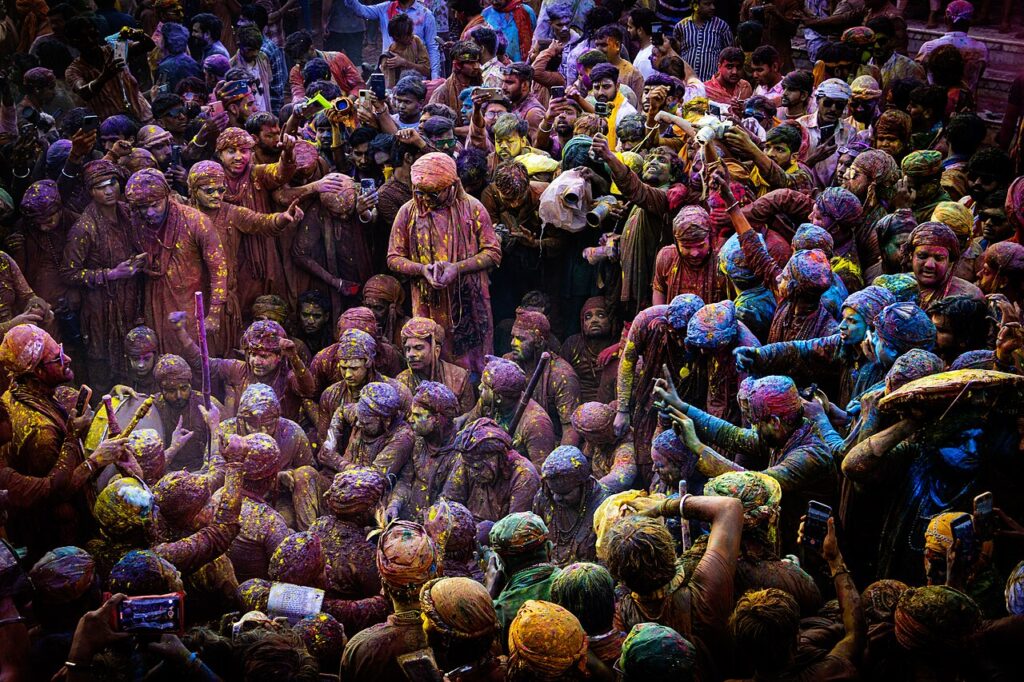
Holi 2026 falls on Wednesday, 4 March. The festival of colours is one of India’s most joyful public holidays — a gazetted day off nationwide — and its exuberant colour-throwing has made it famous far beyond South Asia. Here is where Holi is a public holiday in 2026, and what the day involves.
Where Holi is a public holiday
- India: gazetted public holiday on 4 March 2026 — banks, government offices and schools close.
- Pakistan: celebrated by the Hindu community; not a national public holiday.
- Nepal: a public holiday (dates may differ slightly by region — the Terai and hill regions sometimes observe different days).
- Elsewhere: widely celebrated by diaspora communities in the UK, USA, Canada, Australia, the UAE and beyond, but a normal working day.
The date and its meaning
Holi falls on the full moon (Purnima) of the Hindu month Phalguna, marking the arrival of spring and the victory of good over evil — the legend of Prahlad and Holika. The eve (Holika Dahan, 3 March 2026) sees bonfires lit to symbolise the burning away of evil; the main day (4 March) is the famous colour play, when streets fill with gulal powder, water balloons and music. Because it follows the lunar calendar, the date moves each year, usually landing in late February or March.
What actually happens on Holi
Morning is for the colour play: friends, families and entire neighbourhoods douse each other in coloured powder and water, dance to dhol drums, and share festive foods like gujiya and thandai. By afternoon the colours wash off (mostly) and the mood turns to feasting and rest. In Mathura and Vrindavan — Krishna’s legendary playgrounds — celebrations stretch across a full week, including the famous Lathmar Holi, where women playfully “beat” men with sticks. In 2026, with Holi on a Wednesday, many Indians will bridge leave for a long mid-week break.
Tips for visitors in 2026
Holi is unforgettable for travellers — and messy. Wear old white clothes you are happy to stain, protect your phone in a waterproof pouch, and use coconut oil on skin and hair beforehand (locals swear by it for colour removal). Join organised celebrations at hotels or community events if you prefer a gentler introduction; dive into the street celebrations in Mathura, Vrindavan or Jaipur for the full experience. Book accommodation early — the week of 4 March 2026 will be busy across North India.
Holi beyond India: the global colour party
Holi has escaped the subcontinent. From London’s Southall to New York’s Queens, from Dubai’s parks to Singapore’s promenades, diaspora communities stage colour-throwing celebrations that draw thousands — including plenty of non-Indians there for the sheer joy of it. The “colour run” fitness craze borrowed Holi’s palette wholesale. These global versions keep the spirit (music, dancing, gulal powder, festive food) while softening the edges: ticketed venues, organised time slots, washable colours. They are wonderful introductions, but veterans will tell you the subcontinent’s street Holi — chaotic, neighbourhood-wide, gloriously unscripted — remains the original and best. In 2026, with the main day on Wednesday 4 March, expect diaspora events clustered on the surrounding weekends of late February and early March.