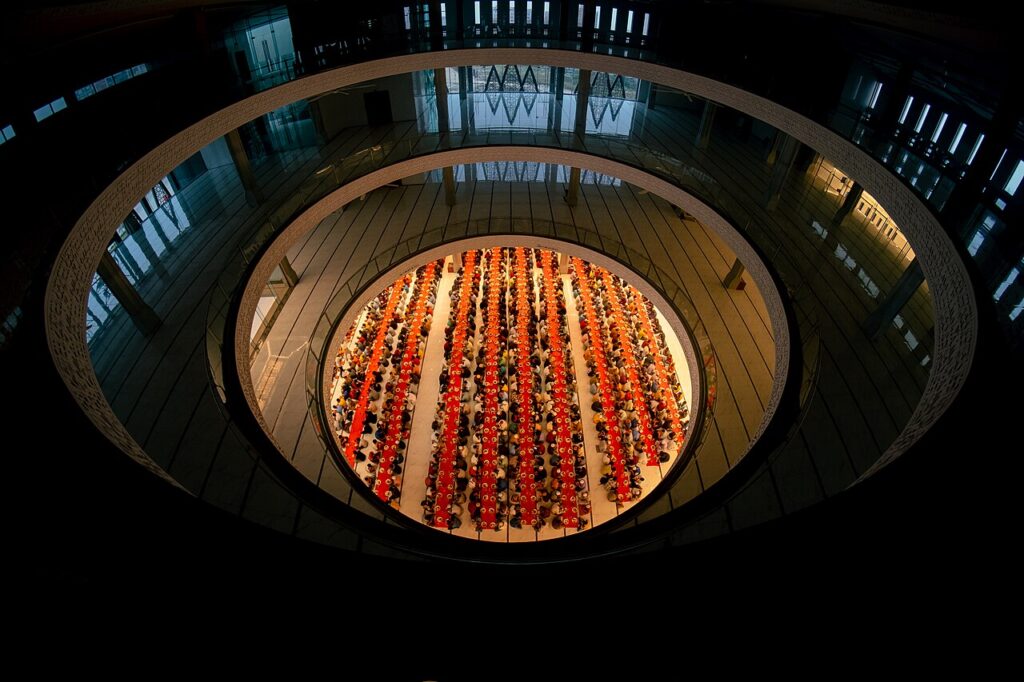
During Ramadan, the working day across the Gulf gets shorter, quieter, and distinctly different. If you work in or with the UAE or Saudi Arabia, understanding Ramadan working hours is as important as knowing the Eid holidays themselves. Here is how the holy month reshapes the working calendar.
The official reductions
Both the UAE and Saudi Arabia legally reduce working hours during Ramadan. In the UAE, the standard practice is a two-hour reduction per day for fasting employees in both the public and private sectors, with government offices typically shifting to shorter morning schedules. Saudi Arabia applies similar reductions, with public sector hours commonly compressed into a shorter day. These are not informal customs but official arrangements, announced each year before the month begins, and they apply regardless of an employee’s religion in most implementations, though the exact rules can vary between jurisdictions and sectors.
How the day feels different
The rhythm of the working day changes profoundly. Mornings start at the usual time but afternoons empty early, as people head home to rest before iftar, the fast-breaking meal at sunset. Meetings are best scheduled in the morning, when energy is highest; late-afternoon appointments are widely considered poor form. Business lunches disappear entirely, replaced by invitations to iftar, which are significant gestures of inclusion. Email response times stretch, project timelines slip, and anyone who has worked a Gulf Ramadan learns to front-load the month’s critical work into its first two weeks.
Schools, shops, and public life
Schools across the Gulf run shortened days during Ramadan, typically starting later and finishing by early afternoon. Malls and restaurants adjust in the opposite direction: many open late and stay open well past midnight, catering to the night-time social life that flourishes after iftar. Grocery stores stock special Ramadan displays, and night markets appear in many cities. For visitors, the month offers a uniquely atmospheric experience, but daytime dining options shrink, so plan accordingly. Non-fasting visitors are expected to refrain from eating, drinking, or smoking in public during daylight hours out of respect.
Planning tips for Ramadan 2026
Ramadan in 2026 is expected in February, so the reduced-hours period will fall early in the year. If you manage teams across the Gulf, set expectations with international colleagues that output will slow and deadlines should shift. If you are travelling for business, book morning meetings, accept iftar invitations graciously, and dress modestly. And remember that the month ends with Eid-ul-Fitr, expected around March 20 to 22, when offices close for several days of celebration. Ramadan’s shorter days are not lost time; they are a different rhythm, and working with it rather than against it is the key to a successful month.
Remote work during Ramadan
Remote and hybrid work have added new dimensions to Ramadan scheduling. Distributed teams spanning the Gulf and the West must reconcile reduced Gulf hours with normal schedules elsewhere, which calls for explicit planning rather than assumption. The best practice is to agree core overlap hours for the month, typically mornings Gulf time, and to move non-urgent collaboration to asynchronous channels. Managers should normalise camera-off afternoons and slower response times rather than letting frustration build silently. For Gulf-based remote workers employed by Western companies, the month is an opportunity to educate colleagues: a brief, matter-of-fact explanation of fasting and hour reductions prevents most misunderstandings. Done well, remote Ramadan can actually run more smoothly than office Ramadan, with rest and prayer fitted naturally around focused work blocks.