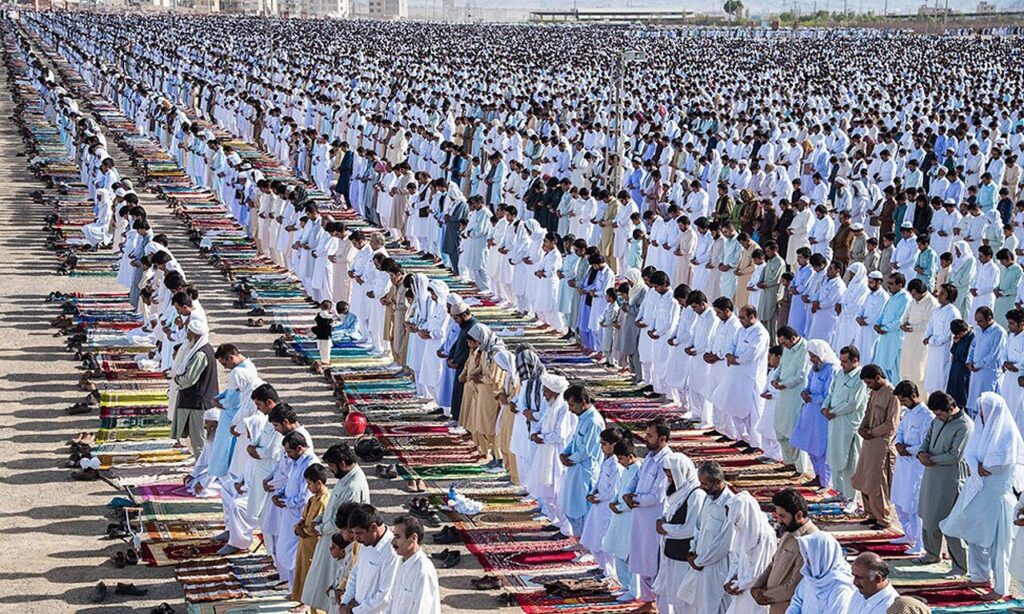
Every year, the same question: when is Eid? And every year, a slightly different answer. Why Eid dates change every year comes down to the Islamic calendar itself — a purely lunar system that drifts against the solar Gregorian calendar by about eleven days annually. Add the tradition of physical moon sighting, and you get dates that are predictable in pattern but confirmed only at the last moment. Here is the full explanation.
A Lunar Year Is Shorter Than a Solar Year
The Islamic (Hijri) calendar is built from twelve lunar months, each beginning with the sighting of the new crescent moon. A lunar month lasts about 29.5 days, so the Hijri year totals roughly 354 days — about eleven days shorter than the 365-day solar year. That eleven-day gap is the entire story: every Islamic date arrives about eleven days earlier each Gregorian year, cycling through all four seasons over roughly 33 years. Anyone who remembers Eid in summer a decade ago and sees it in spring now has watched this drift in real time.
Moon Sighting: Why the Exact Date Waits Until the Night Before
The calendar gives the pattern, but moon sighting gives the date. Traditionally, the new month begins only when the crescent moon is physically sighted after sunset on the 29th day of the current month; if clouds obscure it, the month completes thirty days and the new month starts the day after. Official committees — like Pakistan’s Ruet-e-Hilal Committee or Saudi Arabia’s moon-sighting authorities — gather sighting reports each month and announce the decision, usually on the evening before the expected date. This is why Eid dates are always described as tentative until confirmed: astronomy can predict, but tradition requires witnessing.
What This Means for 2026
Based on lunar calculations, Eid-ul-Fitr in 2026 is expected around 20–21 March (Pakistan’s calendar lists 21–23 March including Pakistan Day; the UAE and Saudi Arabia expect around 20–22 March), and Eid-ul-Azha around 27 May — but every one of these dates is tentative and subject to moon sighting. The exact day can shift by a day in either direction depending on the sighting, and occasionally different countries announce different days when local sighting conditions differ. Treat all pre-announced Eid dates as provisional, and wait for the official committee announcement before finalising travel.
Living With a Moving Calendar
The shifting dates are not a flaw in the system; they are the system — a calendar tied to the actual moon rather than an abstract grid. For planning, the practical approach is well-established across the Muslim world: keep the expected dates marked, keep a buffer day of leave on either side, book flexible travel where possible, and follow your country’s official moon-sighting announcement rather than social media predictions. The eleven-day drift means that over a working lifetime, you will celebrate Eid in every season — a feature, not a bug, of the lunar calendar.
Planning tips
Holiday calendars are published well in advance, but local announcements can still adjust them, especially where dates depend on a lunar calendar or a moon sighting. Bookmark the official source for your region, compare it with your employer policy and leave a small buffer when travelling or shipping goods around the date.
Use this guide as a starting point, compare it with the official source for your location and check again closer to the date, since announcements and local arrangements can change. Sharing the dates early with family, colleagues and customers also avoids last-minute surprises.