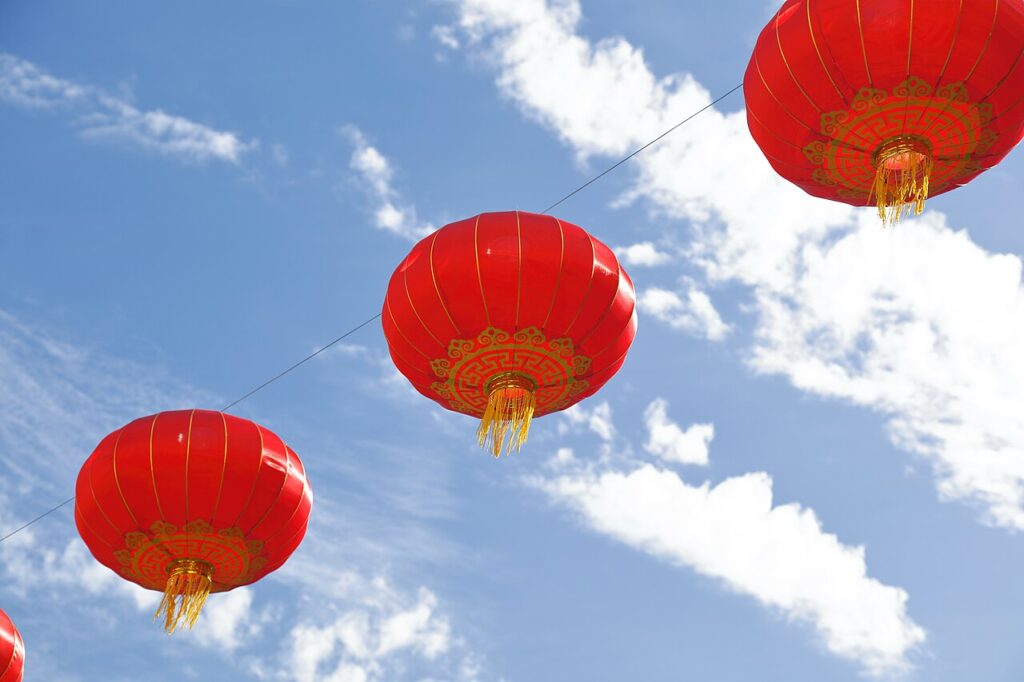
The Chinese New Year 2026 date, like every year’s, follows the lunisolar Chinese calendar rather than a fixed Gregorian day. Also known as Lunar New Year or Spring Festival, it is the most important traditional holiday in Chinese culture, and its date moves every year. Unlike fixed Gregorian holidays, it follows the lunisolar Chinese calendar, which is why the exact date must be checked annually rather than assumed. Here is how the date works and what to expect.
How the date is determined
Chinese New Year falls on the first new moon of the first lunar month, which places it somewhere between January 21 and February 20 on the Gregorian calendar each year. The festival traditionally lasts 15 days, ending with the Lantern Festival on the full moon. Because it is tied to the moon’s phases rather than the solar year, the date shifts annually, and the associated zodiac animal changes with each lunar year. This is the same lunisolar logic that moves Easter, though the two systems use different rules and calendars.
What to expect in 2026
In 2026, Chinese New Year is expected in February, within the usual January 21 to February 20 window. We deliberately avoid stating a precise day here: while astronomical calculations can predict it, the responsible approach for a holiday reference is to confirm against official almanacs and announcements as the year approaches. What is certain is the shape of the celebration: family reunions, red envelopes (hongbao), lion and dragon dances, temple fairs, and spectacular fireworks, with the largest celebrations in China, Taiwan, Singapore, Malaysia, Vietnam (where it is called Tet), and Chinatowns worldwide.
Where it is a public holiday
Chinese New Year is a major public holiday across East and Southeast Asia. China typically grants a week-long Spring Festival holiday, among the world’s largest annual human migrations as hundreds of millions travel home. It is also a public holiday in Taiwan, Singapore, Malaysia, Indonesia, Vietnam, the Philippines, and several other countries, with the number of days varying by jurisdiction. In Western countries it is widely celebrated but not a public holiday. If you do business with Asia, expect significant slowdowns: factories, offices, and ports across the region operate at reduced capacity for one to two weeks.
Planning tips
Never schedule critical deadlines in the fortnight around Chinese New Year if your supply chain touches East Asia. Travellers should book months ahead: trains, flights, and hotels in the region sell out, and prices surge. If you are invited to celebrations, red is the colour of luck, and small gifts in red envelopes are customary for children. And remember the date rule: it always falls between January 21 and February 20, so for 2026, keep February flexible until the official date is confirmed by the almanacs you trust.
The fifteen days of celebration
Chinese New Year is not a single day but a fifteen-day festival, and each day carries its own customs. The eve is for the reunion dinner, the year’s most important meal, when families gather no matter the distance. The first days are for visiting elders and exchanging red envelopes, while the seventh day is traditionally everyone’s birthday. The festival closes with the Lantern Festival on the full moon, when glowing lanterns fill parks and riversides. In mainland China, the official public holiday covers the first week, but the cultural celebration runs the full fortnight. Understanding this arc helps visitors and business partners alike: the quietest business days are the first week, while the Lantern Festival finale is the most photogenic moment of all.