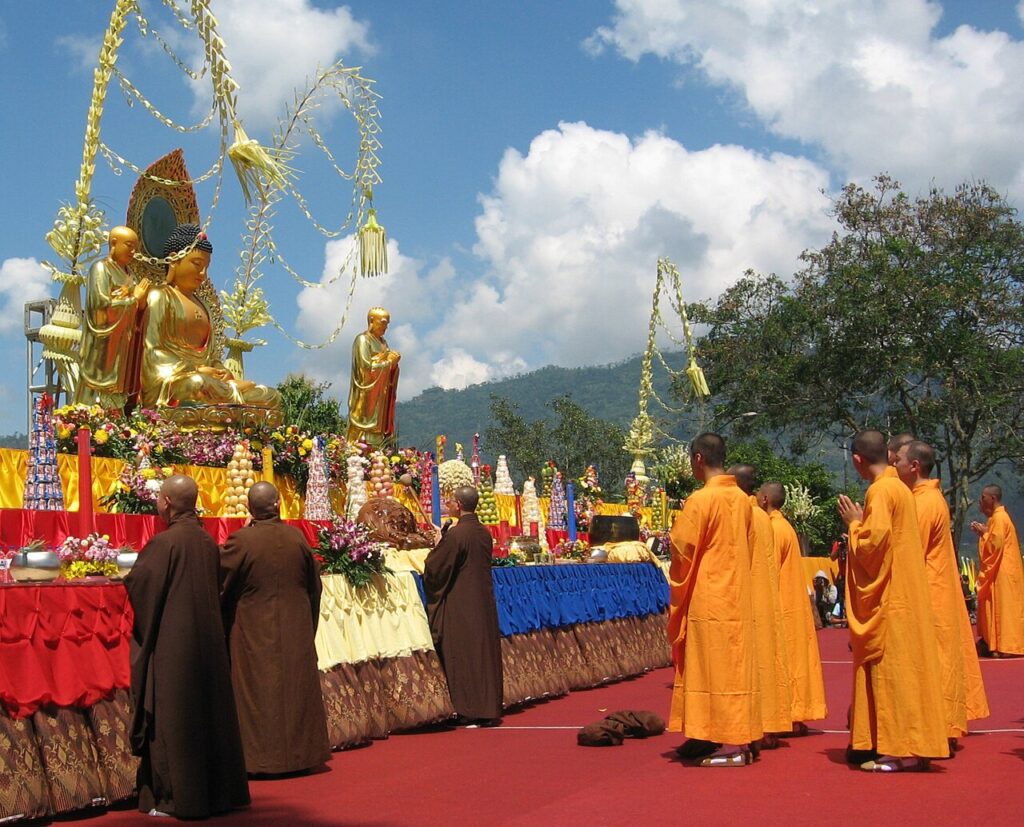
It commemorates the birth, enlightenment and passing of the Buddha — three events tradition places on the same full-moon day — and the Vesak Day public holiday is observed across South and Southeast Asia. But exactly which countries give the day off? The answer spans most of the region. Yet the name, the date and the character of the observance shift from country to country in fascinating ways.
Where Vesak Is a Public Holiday
Sri Lanka treats Vesak as the year’s most important religious holiday, with two full days of observance and the entire island illuminated by lanterns (dansalas give away free food and drink). Thailand (Visakha Bucha), Myanmar (Kason), Cambodia (Visak Bochea), Laos, Vietnam (Phat Dan) and Malaysia all observe it as a public holiday. Singapore and Indonesia (Waisak, centred on Borobudur temple) do too. Nepal — the Buddha’s birthplace — marks Buddha Jayanti as a holiday. In India, Buddha Purnima appears on the national holiday list (1 May 2026 in the central calendar, though the traditional full-moon date varies). Bangladesh also observes it. The United Nations recognises Vesak internationally each May.
One Festival, Many Names and Dates
Vesak follows the lunar calendar, falling on the full moon of the traditional month of Vesakha — usually in May, occasionally early June. Because Buddhist traditions use different calendar calculations, the exact date can vary by country in a given year: Thailand, Sri Lanka and Myanmar do not always agree to the day. The names multiply accordingly: Vesak, Visakha Bucha, Buddha Purnima, Waisak, Phat Dan, Kason — one festival, half a dozen identities. What unites them is the full moon and the triple commemoration.
How Vesak Day Is Observed
Observance is devotional rather than festive. Temples fill before dawn; devotees offer flowers, light lamps and incense, and listen to sermons on the Buddha’s life. In Sri Lanka, the devotional songs (bakthi gee) and towering illuminated pandals depicting scenes from the Buddha’s life transform towns after dark. Many Buddhists observe sil — keeping eight precepts for the day, including abstaining from meat and alcohol. In several countries, the sale of alcohol is restricted and meat sales pause on Vesak Day — practical details visitors should know. It is a day of reflection, generosity and quiet, not fireworks.
Visiting During Vesak
For travellers, Vesak offers profound cultural experiences — Borobudur at dawn, Bangkok’s candlelit temple processions, Colombo’s lantern-lit streets — but plan around the closures: government offices shut, transport runs holiday schedules, and nightlife goes quiet in observant countries. Alcohol restrictions catch many visitors by surprise, so plan accordingly. As with all lunar-calendar holidays, confirm the exact date for the specific country you are visiting, since it can differ across borders. Vesak rewards the respectful traveller like few other festivals: arrive curious, dress modestly for temples, and join the quiet.
It is also worth understanding what makes Vesak unusual among public holidays: it is explicitly a United Nations-recognised day of observance, and its triple commemoration — birth, enlightenment and passing on the same lunar date — has no parallel in other religious calendars. That layered meaning is why the day carries such weight across so many countries, and why even non-Buddhist neighbours often treat it with marked respect. A public holiday that is really a day of reflection is a rare thing — Vesak is one of the few.