It is one of the world’s oldest continuously celebrated holidays — over 3,000 years old — marking the spring equinox with fire-jumping, feasting and family. But which Nowruz public holiday countries actually give the day off? The Persian New Year is an official holiday across a wide arc from the Balkans to Central Asia, though the length and character of the break vary enormously.
Where Nowruz Is an Official Public Holiday
Iran treats Nowruz as the year’s central holiday, with an extended break of nearly two weeks — the longest holiday period in the Iranian calendar — during which the country effectively pauses for family visits and travel. Afghanistan, Tajikistan, Uzbekistan, Turkmenistan, Kyrgyzstan, Kazakhstan and Azerbaijan all observe Nowruz as a public holiday, typically one to several days. Albania marks it too, reflecting the holiday’s reach into the Balkans. In 2010, the United Nations recognised 21 March as the International Day of Nowruz, cementing its global cultural status. In these countries, the equinox is not folklore — it is the official start of the new year.
How Nowruz Is Celebrated
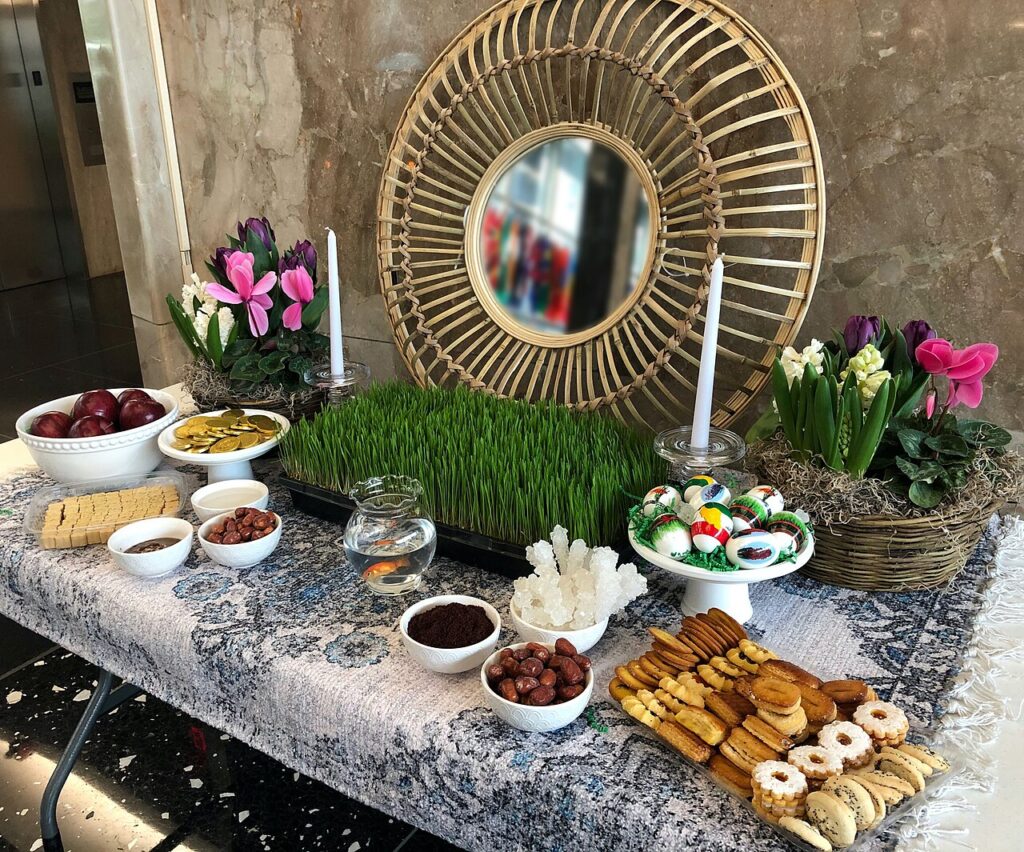
The traditions are rich and remarkably consistent across borders. Families set the Haft-Sin (or Haft-Seen) table with seven symbolic items beginning with the Persian letter ‘seen’ — each representing renewal, health or prosperity. On the last Tuesday evening before Nowruz, people jump over bonfires chanting for the fire’s redness (health) in exchange for their pallor (sickness) — the Chaharshanbe Suri fire festival. Thirteen days later, Sizdah Bedar sends everyone outdoors for picnics in nature, closing the holiday period. Sprouted wheat, painted eggs, goldfish in bowls and new clothes complete a celebration that is fundamentally about renewal.
Where It Is Cultural but Unofficial
Beyond the official-holiday arc, Nowruz is celebrated by Kurdish communities (as Newroz, with particular fervour), by Persian diaspora communities worldwide, and in parts of Turkey, Iraq, Syria, Pakistan and India — generally as a cultural festival rather than a public holiday. In these places, you will find fire festivals, concerts and community feasts, but offices stay open. The diaspora celebrations in cities like Los Angeles, London and Toronto are among the largest outside the traditional region.
Visiting During Nowruz
Travelling in an official Nowruz country during the holiday is a double-edged delight: the atmosphere is unmatched — streets decorated, families in festive mood, special foods everywhere — but transport and accommodation book out, government offices close for extended periods, and business grinds to a halt. In Iran especially, the two-week break means planning anything official is futile; plan to celebrate instead. Elsewhere, a day or two of closures is the norm. Wherever you encounter it, Nowruz offers the same invitation it has for three millennia: step into spring, and begin again.
A final note on timing: because Nowruz is fixed to the spring equinox — around 21 March — it is one of the few major holidays whose Gregorian date barely moves, varying by at most a day. That makes it unusually plannable for a traditional festival: you can book travel around the equinox with confidence years in advance. The exact moment of the equinox even determines the new year’s precise start in the Iranian calendar — a holiday timed not by committee, but by astronomy itself.